

As well as those who were deported, an unknown number were detained, lost their jobs or homes, had their passports confiscated or were denied benefits or medical care to which they were entitled. A number of long-term UK residents were refused re-entry to the UK; a larger number were threatened with immediate deportation by the Home Office. Linked by commentators to the “hostile environment policy” instituted by Theresa May during her time as Home Secretary, the scandal led to the resignation of Amber Rudd as Home Secretary in April 2018 and the appointment of Sajid Javid as her successor. The scandal also prompted a wider debate about British immigration policy and Home Office practice.
The March 2020 independent Windrush Lessons Learned Review conducted by the inspector of constabulary concluded that May’s Home Office showed “ignorance and thoughtlessness” and that what had happened had been “foreseeable and avoidable”. It further found that immigration regulations were tightened “with complete disregard for the Windrush generation” and that officials had made “irrational” demands for multiple documents to establish residency rights.
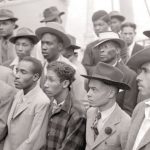
Britain was just starting to recover from World War Two back then. Thousands of buildings had been bombed, lots of houses had been destroyed and it all needed to be rebuilt. In the Caribbean, lots of young men and women had served in the British armed forces because at the time, many Caribbean countries were still under British rule and not yet independent.
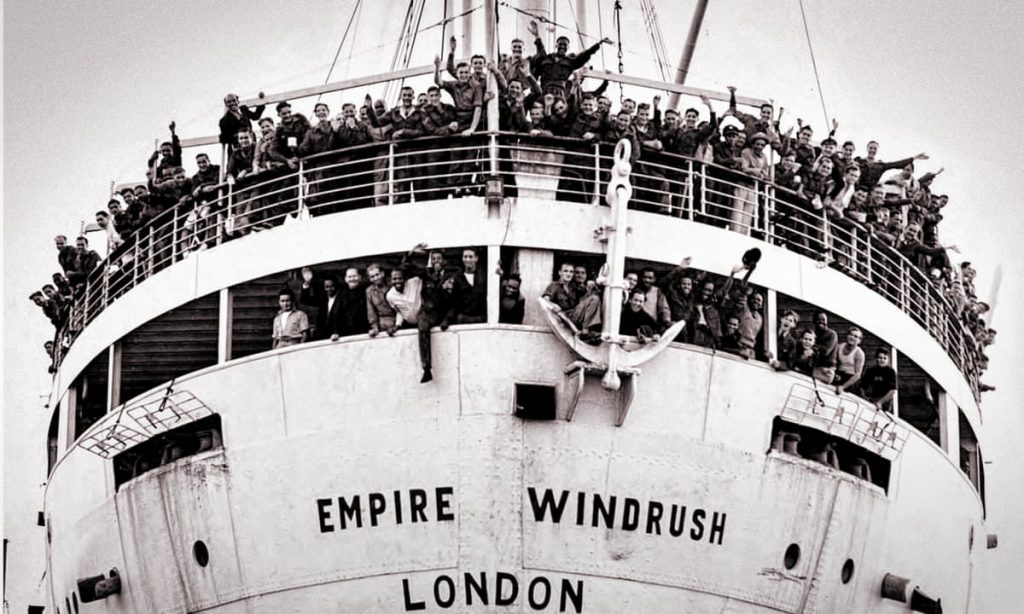
After the war, some of these people answered an advert to come to Britain where there were lots of different jobs to do. Other people just wanted to see Britain, which they had heard so much about. They got on a ship – the Empire Windrush – which left the Caribbean to travel thousands of miles across the Atlantic.
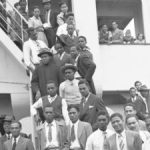
This was the first time so many Caribbean people had come to live in Britain. Many more arrived in the following years. It was 22 June 1948 when the Empire Windrush arrived at Tilbury Docks in Essex. When the passengers landed they didn’t always get the friendly welcome they had hoped for.
Many of them experienced racism and discrimination and often found it hard to get proper home to live in and to make friends with British people. It wasn’t always easy for the new arrivals to get jobs. Some companies said they didn’t want black people to work for them. Later, many of their children were bullied at school because of the colour of their skins. Some of them suffered racial attacks and in later years there were riots in cities across Britain.
It is more than 70 years since the Empire Windrush sailed to Britain from the Caribbean. An estimated 500,000 people now living in the UK who arrived between 1948 and 1971 from Caribbean countries have been called the Windrush generation.
But, some of the people who arrived in the UK as children with their parents were later told – wrongly – that they live here illegally. In 1971 these people were told they could stay permanently but the government didn’t keep a full record of them. Some of these people didn’t apply for official paperwork like a UK passport. In 2012 there was a change to immigration law and people were told they needed official documents to prove they could get things like free hospital treatment or benefits in this country. This led to some being been sent to immigration detention centres and facing deportation.
On 21 August 2018, the then-Home Secretary Sajid Javid announced that – after a review of 11,800 cases – 18 members of the Windrush generation who could have been wrongfully removed or detained would get a formal apology from the government.
He also said that anyone who had left the UK would also be helped to return. The prime minister at the time, Theresa May, apologised to Caribbean leaders and reassured them that no one from the Windrush generation will have to leave the UK. She said Windrush migrants were “part of us” and that there was no question of forcing anyone who had made their life in the UK and was here legally to leave. The government also announced that a day celebrating the contribution of the Windrush generation and their descendants – Windrush Day – would be held annually on 22 June.